Flexible Conduit for Robotics and Automation
Select flexible metal conduit for robot arms, moving sensors and automation equipment by defining bend geometry, torsion, cable fill, environment and fittings.
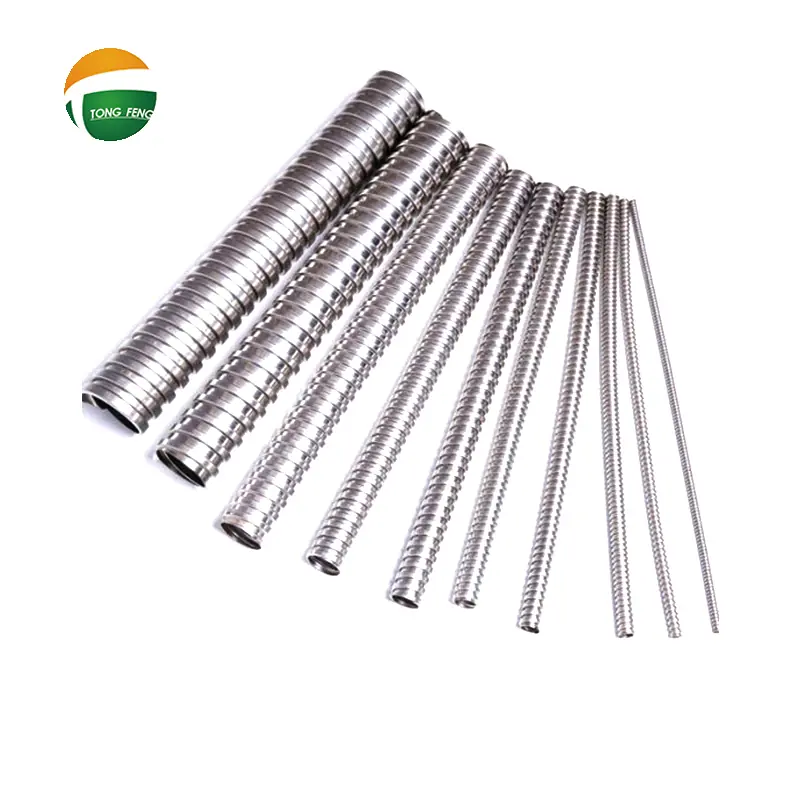
The challenge
Robot arms, moving sensors and machine-tool assemblies combine repeated motion with limited installation space. The conduit construction, bend route and sheath must be selected as one system rather than as separate parts.
Selection priorities
Start with the motion
Document the minimum bend radius, travel length, cycle pattern and whether the conduit bends in one plane or twists during operation.
Match the construction
SquareLock can be screened for compact routes, but the approved profile drawing, permissible bend radius and movement qualification must be confirmed for the exact product. Any covering is evaluated as part of the finished assembly.
Protect the complete route
Confirm termination, fitting, abrasion and support requirements. A flexible tube cannot compensate for an over-tight bend or a poorly controlled moving loop.
Typical applications
- Robot-arm cable routing
- Moving sensors and encoders
- Machine-tool wiring
- Compact precision equipment
Frequently asked questions
Which construction is the starting point for repeated movement?
Construction names do not establish movement capability. Screen candidates from the route geometry, then qualify the exact conduit, covering, bundle, fittings and clamps against the target movement profile.
Does adding a sheath change flexibility?
A sheath adds environmental protection and changes the finished outside diameter and movement behavior. The material and thickness should be evaluated with the required bend route.
What information should be included in an inquiry?
Provide cable or fiber diameter, desired conduit I.D. and O.D., bend radius, cycle pattern, route length, environment and any fitting or ingress-protection requirement.