How to Read Flexible Conduit I.D., O.D. and Size Tables
A clear way to read tube dimensions and prepare the cable, route and fitting information needed for selection.
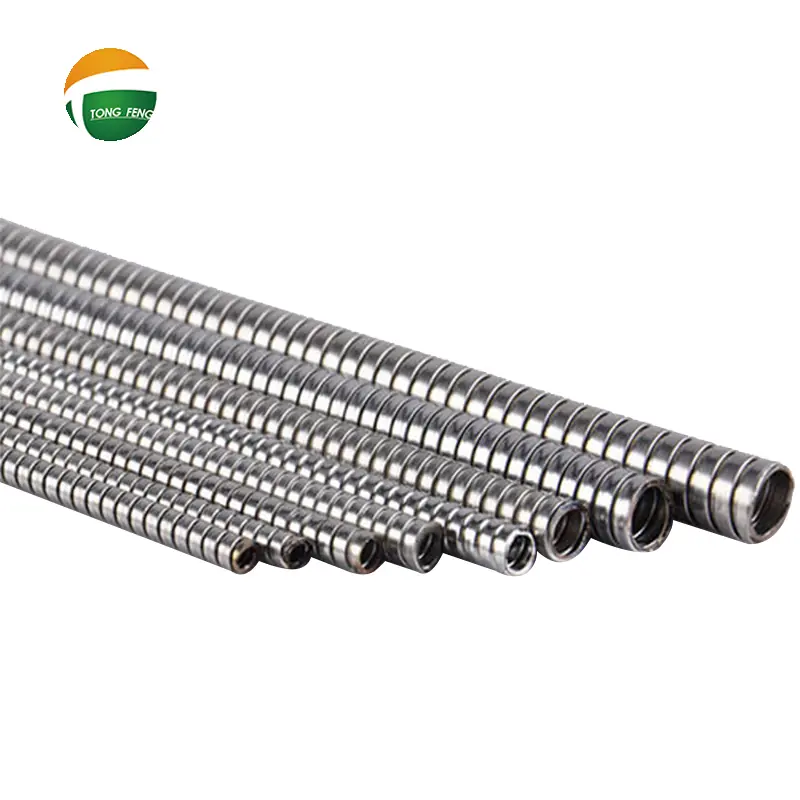
· · 5 min read
Quick answer
A product table may list separate bore, metal-tube O.D. and finished covering O.D. values. Read each column definition, tolerance and measurement condition before selecting a cable, fitting or equipment passage.
The three dimensions
- For stripwound metal hose, bore or I.D. is the diameter of the largest sphere that can pass through the hose. It is not automatically the permitted cable-bundle envelope.
- Metal-tube O.D. is the diameter of the cylinder enveloping the hose in a straight condition. State its tolerance and measurement condition.
- In a TongFeng table, finished O.D. should mean the maximum specified outside diameter after the listed sheath or covering is applied. State the included layers and tolerance.
Do not size from one number
Select bore from the bundle envelope, permitted fill criterion, connector passage, bend route and pull-in method. The finished O.D. must also match equipment openings, clamps, seals and fittings.
Non-whole-number dimensions may result from legacy trade-size conversions, profile geometry and strip or covering thickness. Show tolerance separately from the nominal value.
Send a complete dimensional request
- Completed cable or fiber-bundle envelope and permitted fill criterion
- Required bore or pass-through value and tolerance
- Maximum finished O.D., connector passage and fitting interface
- Route length, installation radius and any validated dynamic bend radius
- Static, repeated-flex or torsional movement, covering, material and environment requirements
Frequently asked questions
Is nominal size the same as measured I.D.?
No. DN or trade size is a nominal designation indirectly related to I.D. Use the stated bore or pass-through value and tolerance for fit calculations.
Why is the sheathed O.D. listed separately?
A covering changes the finished diameter and can affect passages, clamps, fittings, seals and bend behavior. The table should identify the included layer and tolerance.